Pages

Saturday, February 9, 2013

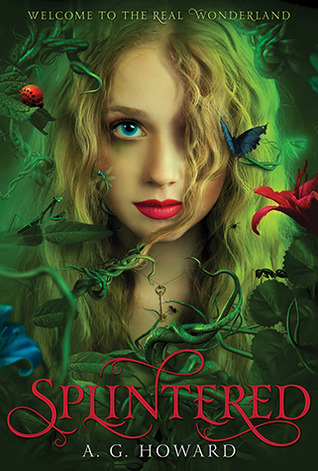
First Read Friday - Splintered by A.G. Howard


     Title: Splintered 
     Author: A.G. Howard
     Publisher: Amulet Books
     Published: January 1, 2013
     Number of Pages: 371
     Genre(s): Fantasy, YA
     Date Read: February 8, 2013
     Acquired: Wal-Mart

Summary: 
It's not normal to hear voices; it's even less normal when the voices you're hearing appear to be coming from bugs and flowers right? Well in Alyssa Gardener's family, it is normal, at least for the women, and it's all her great, great , great grandmother's fault. You see Aly's great, great, great grandmother (on her mother's side) was the infamous Alice Liddell, yeah that Alice, the one who inspired the nonsensical children's story written by Lewis Carroll. Apparently Alice actually really did go to Wonderland and she told Carroll all about it when she came back. She left out the part about how she was cursed though, and now all the female members of her family go crazy and start to hear talking plants and animals. It happened to Alyssa's mom Alison, who is locked up in a psych ward, and now it's happening to Alyssa.

All Aly wants is a normal life, she wants her mom to come home and she wants the guy she likes to like her back. But the only way for those things to happen is for her to break the curse, and the only way for her to break the curse is to go back down the rabbit hole the same way her great, great, great grandmother did. After a fight with her crush, she finally snaps and decides that there's no time like the present to clean up Alice's mess, she didn't count on Jeb following her along though. And when they get to Wonderland they find out that it's not exactly the wonderful place that Lewis Carroll painted it to be, little Alice must have gotten some things wrong in her descriptions because Wonderland and its Netherling inhabitants are even stranger and darker than Aly and Jeb could've ever imagined. Upon their arrival they find out that the only way to break the curse and get back home is to clean up all of the messes that Alice made, but there are a few catches, and a few unforeseen problems, and Aly and Jeb aren't sure, but they feel like their being manipulated somehow. Will they ever get home? And even if they do, will they ever be the same?

Review:
I am and always have been, without a doubt a HUGE Alice in Wonderland and Alice's Adventures Through The Looking Glass fan. They are two of my favourite childhood stories, and Wonderland is one of my favourite fantasy worlds, I would go to Wonderland in a heartbeat, it would be my vacation destination of choice. So being that I am a huge fan of the original works, you can guess that I also really, really like movie adaptations, and literary retellings. The minute I see that a film or book claims to use Alice as source material I will watch it or read it without fail. Disney's 1951 animated version, the Time Burton live action extravaganza, the Syfy channel's sci-fi adpatation simply called Alice, Frank Beddor's Looking Glass Wars novels, Hatter M. graphic novels, and Princess Alyss of Wonderland companion book have all been devoured and all grace my shelves. The only reason I haven't played American McGee's Alice: Madness Returns is because my computer is getting on in years and refuses to play it, and I refuse to buy a PS3 copy since I already bought a copy for my PC...And none of that takes into account all of the other various Alice merchandise that I have, multiple versions of the original stories, a hand printed White Rabbit messenger bag, tshirts, sweaters, music boxes, posters and prints, the only things I'm really missing are stuffed animals and props, and the only fandom I have more merchandise for is Harry Potter (for which I do have stuffed animals and props, but lo that is a digression!). 

Why did I just tell you all of that? Because it's important background information, before I review Splintered I wanted you to understand just how seriously I take the Alice stories and world, and how much the story and characters mean to me! So now that I've gotten that out of my system, let us continue with the review at hand.

I know I've got the labels adaptation and retelling applied to this novel already, but in the strictest use of those terms, they are not what this book is. Not at all. A.G. Howard has taken the Caroll stories as source material yes, but she isn't rehashing the story or re-envisioning it. This is more akin to a sequel. Alice herself is a background character, long dead and only mentioned. The main character in this novel is her look alike great, great, great granddaughter Alyssa. I don't know why A.G. thought it would be fitting to give all of the female descendants of Alice Liddell names similar to Alice, especially given that they believe Alice brought a curse down upon them, you really think they'd actually want to stay as far away from Alice-like names as possible, or at least that's my thinking, what do you all think? So anyway, it's about a descendant, and the ramifications of Alice's adventures, both on her relatives, and on Wonderland. I really like the idea about going back to a fictional world a long time after the "happily ever after" and exploring what really happened; I've had visions of doing similar things myself, in fact in my head I have completely extrapolated a life for Susan from The Chronicles of Narnia post-Last Battle. But that's another thing to talk about another time.

All of the characters and places from the source material are here, as to be expected, but they're all a lot different than the way we remember them from Carroll's books, chalk that up to Alice only being a little girl when she first met them all, and she wasn't really capable of understanding just how weird and scary they really are. Rabid White/The White Rabbit was the hardest one for me to handle, he's extremely grotesque in the "real" Wonderland, and Tweedle Dee and Tweedle Dum are replaced by the Twid Sisters, arachnid-like Netherlings who mind the souls in Wonderland. One thing that gets me about this story, and most/if not all adaptations and retellings of Alice is the fact that Wonderland and Through the Looking Glass always seem to get mashed together into the same story. And when this happens the Red Queen and the Queen of Hearts always seem to become one person. 

The world in Through the Looking Glass is completely separate from Wonderland, and therefore the Red Queen and the Queen of Hearts (and their respective kings) should be two separate sets of people. But in A.G.s novel, as with other adaptations, that seems to have been forgotten and the two worlds have once again been mashed together to become one. At least in this story A.G. has some elements that try and account for that: the rabbit hole is how you get IN to Wonderland, mirrors are the portals OUT and can also be used by the Netherlings to travel from one place to another both within Wonderland and in the mortal world. And there was also all of the chess references, cunningly placed to be reminiscent of the chess game in Through the Looking Glass. Although it still falls prey to the Red Queen/Queen of Hearts problem. Yes there are two Queens and it's rather easy to tell that Red = Queen of Hearts and Grenadine = Red Queen, but there's only one King so it still doesn't sit completely right with me. Geographically both Wonderland and the world of Through the Looking Glass are represented in A.G.'s Wonderland, all the locales an Alice fan like myself is expecting to see are recognisable if slightly changed by the darker, edgier vibe, and melded in are some places meant to evoke Through the Looking Glass, the checker-board sands of the desert for example, and the addition of the Walrus (Octobenus), Carpenter and Clams to the pool of tears.

Overall this book succeeds in doing exactly what the author set out to do. She wanted to explore what happened after Alice came back and she did that magnificently. This darker, edgier Wonderland will appeal to teenagers whether they liked Alice as children or not. I also give the author huge props for doing something I've always wanted to do, but have also always been fearful of doing. When you love a story as much as I, and A.G. love Alice of course you want to put your own mark on it, but that's a scary, daunting thing to actually do, because if you screw it up? Oh man you would never hear the end of it, it would just be humiliating and bad. But A.G. Howard has nothing to worry about there in my humble opinion because I feel like she has done Lewis Carroll's legacy proud.

--Ren

Wednesday, February 6, 2013

5 Epic Fantasy Series You May Have Missed

I have been an epic fantasy fan pretty much since day one. Epics in general seem to be something I have always been drawn too, and maybe that is partially because the first book my mother read to me when she brought me home from the hospital was War & Peace because that's what she was reading at the time (Although if we're following that logic how do we explain the fact that I can't stand Tolstoy, Chekov, Dostoevsky et al.?); epic fantasy is especially close to my heart though. Some of my fondest memories from my childhood are from my grade 4 class, we had the most amazing teacher, a wonderful Scotsman who at the end of every school year would lead the entire student body around the block with his bagpipes. But that's not the reason I brought him up, he read to us every day for at least 30 minutes, he read us really good books like everything by Roald Dahl and also Lord of the Flies, but my favourite thing that he read to us was The Hobbit, and he didn't just read it, he breathed life into it, he gave every single character their own distinct voice. His reading of that book has spoiled me, I can't read it on my own any more because it's just not as good as when he read it to us.

So in honour of Mr. McNaught, the love of epic fantasy that he instilled in me, and his brilliant reading of The Hobbit I present my list of 5 Epic Fantasy Series That You May Have Missed:


1. The Fionavar Tapestry (The Summer Tree, The Wandering Fire, The Darkest Road)

First published in 1984 by Canadian author Guy Gavriel Kay, this series, according to my Tolkien & Fantasy Professor, is one of the definitive examples of the epic fantasy genre, and especially of Tolkienian fantasy. I am inclined to agree but I also always felt like this trilogy had just as much in common with Lewis's Narnia, Rowling's Harry and even Carroll's Wonderland to a certain extent, so I am really glad to see that the curriculum for the Tolkien & Fantasy course has been updated to include some of those authors as well, but that's a digression! Fionavar is a secondary world example of epic fantasy. Young Adults from "present day" Toronto are taken into a secondary, separate fantasy world. Once in the fantasy world they encounter many of the races the audience expects of a high fantasy world, and also the celtic gods of earth mythology. Classic battle of good vs. evil for the fate of the world ensues, some of the magic spills back out into the primary world. Any epic fantasy fan knows what the end will be, the end isn't the point, it's all about getting there.

2. The DragonKeeper Chronicles (DragonSpell, DragonQuest, DragonKnight, DragonFire, DragonLight)

When the author herself cites her biggest literary influences as C.S. Lewis and J.R.R Tolkien you really can't NOT include her on a list about epic fantasy series. This series is relatively new to the market, the first book was only published in 2004 and the conclusion appearing 4 years later in 2008. As is tradition in the realm of epic fantasy you have one main character, Kale in this case, who ends up on a quest and in that quest ends up surrounded by an unlikely group of allies and the fate of the world ends up resting on their shoulders. The particular fantasy series has decidedly Christian undertones, but it's easy enough to ignore those should you be so inclined, they're not in your face but they are there if you know what you're looking for. That being said if you love dragons this series is FILLED with dragons, from teeny tiny pet dragons that are more like shih tzus than they are dragons, to larger riding dragons (like in Eragon), to ANTHROPOMORPHIC DRAGONS!!! Sorry but I had a little bit of a geek out there as I am want to do every time I think about how awesome that is.


3. The Farsala Trilogy (Fall of a Kingdom, Rise of a Hero, Forging the Sword)

Hilari Bell has written a fair few novels and fantasy is definitely her thing. This is her epic fantasy trilogy, it debuted in 2003. Fall of a Kingdom was her 5th book to be published even though it was the 15th book that she wrote. As with the above 2 mentioned series, I have yet to find someone else who has actually read these books let alone heard of them. That disappoints me because these are very good, and wonderful examples of epic fantasy. There's prophecy, good vs. evil, good old fashioned sword to sword combat, magic, hard to pronounce city and character names, and a mysterious metal that appears to be indestructible and unbeatable. The characters in this series are my favourite kind, super complex and well developed. This series is less about archetypal good and evil and more about the lesser of two evils and the balance between the people and the power. It's epic to be sure but there's also a lot of subterfuge and subtle working against a besieging enemy that you don't always expect from an epic high fantasy series.

4. The Abhorsen Series (Sabirel, Lirael, Abhorsen, Across the Wall, Clariel)

I am insanely, insanely excited right now! I loaded the GoodReads page for this series so I could link to it and discovered that the 4th book Clariel has been confirmed! I didn't even know Garth Nix was planning another book for this series! I thought he was calling it done after the trilogy! Nix is one of my favourite authors, I love everything by him that I've read but the Abhorsen series has to be one of my all time favourites of any author. And it's going to be a prequel! I LOVE prequels, must have ALL the back stories!! Sorry, I'm geeking out again, please forgive me? Abhorsen opens with Sabriel which is the name of the title character, who happens to be the Abhorsen-in-waiting. the Abhorsen is a special type of necromancer, and in the world of the Old Kingdom and free magic the role of the Abhorsen is of vital importance. She's at boarding school in Ancelstierre when the big bad starts to cause problems in the Old Kingdom that only she can fix, so in the grand tradition of epic fantasies she sets off and picks up a set of companions along the way all while learning to truly harness her amazing powers. Lirael introduces the Clayr who are of course a race of clairvoyants, because even though she thought she'd beaten the big bad in the first book, of course she hadn't or it wouldn't be an epic fantasy series, she had only beaten his second in command. This series is a definite must read.


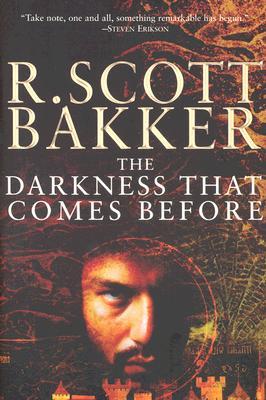
5. The Prince of Nothing (The Darkness That Comes Before, The Warrior Prophet, The Thousandfold Thought)

Another Canadian series, this one by R. Scott Bakker (who came to my Tolkien & Fantasy class back in 2009 to give us a lecture about the series.). This series is the heaviest one on this list. I still haven't managed to get through the entire trilogy and not for lack of want. The books in this series are extremely complex, filled with philosophy and intensity. There's a lot to get through. They do not read fast, at all. But if you're willing to put in the time and effort to read it they are DEFINITELY worth it. Everything you would expect from an epic fantasy series is in these books, as one of the titles shows you've got a religious prophet who is also a warrior, there's dark magic, good magic. Like I said I haven't read them all yes, but I did work my way through the first book and I was insanely impressed.

So have you read any of these series? Did you enjoy them or not? Let me know! And do you have any other epic fantasy series to recommend?

-- Ren

Monday, February 4, 2013

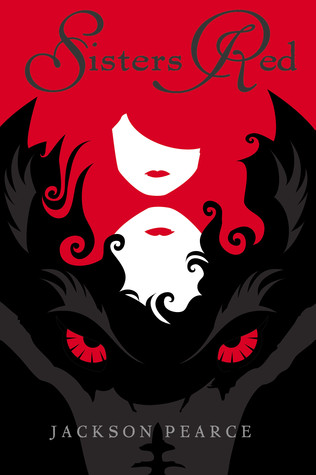
Sisters Red by Jackson Pearce


     Title: Sisters Red (Fairytale Retellings #1) 
     Author: Jackson Pearce
     Publisher: Little Brown Books
     Published: June 7, 2010
     Number of Pages: 328 
     Genre(s): Fantasy
     Date Read: August, 2010
     Acquired: Wal-Mart

Summary: 
This is not your Grandmother's Little Red Riding Hood, it's not even your Mother's Little Red; this Little Red Riding Hood doesn't deliver baked goods, she's tough and sassy and she's trained to kill, with a razor-sharp hatchet. Her name is Scarlett March and she dons the cloak as a means of luring the Fenris, aka werewolves, to their doom. They took her eye, her innocence, and most of her family. She'll do whatever it takes to rid the world of these abominations and to protect young girls from suffering the way she did, especially her little sister Rosie. She's not stopping until every one of them is dead.

Rosie March used to have an unbreakable bond with Scarlett. She once thought they were inseparable and that they would be together forever. Once. Even though she owes Scarlett her life, even though she fights ferociously alongside her, she feels herself drifting away, dreaming of and longing for a different life, one without werewolves and killing and constantly having to be on guard. Silas represents her chance for that, but to take that chance with Silas might mean betraying her sister and everything they've worked for, because Silas isn't just any boy, he's a trained woodsman, as deadly with an axe as Scarlett, he's her partner, and her only friend.

Silas loves Rosie, he feels the same conflict she feels in betraying Scarlett, but he has an even bigger secret, one that neither of the girls knows about. One that could put them both in danger, does he have the strength to do what's right? Does he have the strength to stop loving Rosie?

Review:
As far as fractured fairytales and re-visioned stories go this one is right up there as far as I'm concerned. Is it a literary masterpiece that will make you weep from the beauty of the prose? No, but then I've never been the biggest fan of such high-brow stuff, I respect it and appreciate it for what it is but it's not my idea of pleasure reading. Sisters Red is most definitely a for pleasure book. It has recognisable elements from the source story, a young girl in a red cloak, a woodsman who comes to her rescue, and a wolf; or you know, several. It takes those familiar elements and adds things and embellishes just generally taking the story up to eleven. In the fairytale Little Red was a helpless little girl who needed to be rescued; Pearce's Red, in the form of Scarlett certainly started off that way, but she doesn't stay that way. I like to imagine that if you went back to the original Red a few years after her adventure that she'd have grown up to be like Scarlett. Someone who takes in what they've experienced and learns from it. Who goes from being a victim to someone who can stand on her own two feet and fend for herself. Scarlett does that, she experienced a damsel in distress incident, internalised the experience, learned the lesson, and then turned around and learned how to terrorise the creatures who once terrorised her, becoming a hardcore action girl and a definitive example of a Little Red Fighting Hood

This re-vision changes the classic tale from a simple moral tale that the story originally was and introduces multiple, not necessarily clear cut morals. For Rosie the biggest moral has to be to follow one's heart. For Scarlett, leave nothing to chance and if you want something done right it's best to do it yourself. For Silas, you can change your destiny. 2/3 of those morals I am okay with. Something that really disappointed me about this novel was Scarlett's ending, she seems to have the least amount of character growth of all 3 of the protagonists. By the end she's still as obstinate, stubborn, driven and obsessed with her mission as she was at the beginning, everything has changed around her, but she doesn't seem to have changed at all except for the fact that she no longer believes that everyone has to help her in her vendetta...I suppose that's progress...

*!THIS PARAGRAPH HAS SPOILERS!*
About Silas changing his destiny? I really love the way Pearce took the 7th son of a 7th son trope and used it as a plot device in Silas's case; and now I've probably given away the best plot twist in the book...I better go and put a spoiler alert on this! Having it turn out that he's the reason the Fenris are drawn to their city was a brilliant twist. I was not expecting it to come out that he was at risk, but it fits so well and makes perfect sense. Definitely one of my favourite parts of the book.

Do you enjoy fractured fairytales? If so what are some of your favourites? I'm always looking for more!

--Ren

Friday, February 1, 2013

First Read Friday: The Taker by Alma Katsu


     Title: The Taker (Book One of The Taker Trilogy) 
     Author: Alma Katsu
     Publisher: Gallery Books
     Published: September 6, 2011
     Number of Pages: 464 
     Genre(s): Paranormal Romance, Urban Fantasy, Historical Romance
     Date Read: February 1, 2012
     Acquired: Wal-Mart

Summary: 
Luke is working what starts off as a quiet night shift in the ER of a small town Hospital in rural Maine. That quiet relaxing shift ends when the Deputy shows up with a murderess; an ethereal waif with a mass of blonde curls, slight, beautiful, and covered in blood. Luke is immediately and inexplicable intrigued by this girl, but not because she is a murderer, he can't pinpoint why, and then she starts to tell him her story. The story starts with an admission that, yes, she did kill her companion, but it wasn't murder, he had asked her to do it. He being Jonathan St. Andrew, Luke doesn't believe that it is a coincidence that the man shared his name with the town they are in.

Lanny, that's the name of the beautiful killer, convinces Luke to help her escape the hospital by beguiling him with her sordid tale. With her story she takes him back over 200 years, to her birth and early life with Jonathan as the children of the founding generation of St. Andrew, Maine. How she loved him all of her life, and he never loved her back; the multitude of ways they hurt each other until she was sent to Boston. In Boston Lanny finds herself ensnared by a hedonistic group led by a charming, sado-masochistic, madman who falls in lust with Lanny's beauty and capacity for "perfect love". As they run for the Maine-Quebec border crossing Lanny's story changes to Lanny's story about this man, Adair's story, and from then on the three tales are interwoven. Lanny is trapped with Adair, forced to entrap Jonathan; has she trapped Luke the same way 200 years later after killing Jonathan?

Review:
What drew me to this book first was the striking cover; every time I went into the store it sat there on the shelf calling to me. Finally I caved and picked it up to read the summary on the back. My first thought was "Oh another vampire novel, sounds interesting enough." and with that it was promptly put into the cart and brought home. Where it then sat on the pile for a month or so calling to me as I read other books. I was in the process of trying to read The Thirteen Hallows, but I was having trouble keeping engaged, and I realised the reason was that I REALLY wanted to be reading The Taker, so I gave in and put the Hallows on hold to take it up.

To be honest I wasn't entirely sure how I felt about it as I started reading it, and that uncertainty stayed with me for most of the books. Be warned that this is actually a very dark book, with quite a few morbid parts. It markets itself as a romance, a love story, but I really don't like those labels for this. None of the love in this book is healthy in any way, shape or form. You've got Lanny's obsessive love for a self-centred, arrogant golden boy who takes her for granted and strings her along for her entire life; KNOWS that he is doing it BUT STILL CONTINUES to do because she's his only friend. Then you've got Jonathan, the aforementioned golden boy who claims to love Lanny, but not enough to actually rectify the way he treats her. Adair claims to love Lanny, but I feel like he is completely amoral and incapable of love, he feels covetous of her beauty and her capacity to love, he doesn't love her but he desires her and wants to posses her. She in turn sort of falls for him for a time in what screams to me a clear cut case of Stockholm Syndrome until she rationalises herself out of it. And then there's Luke, who toward the end of the novel fancies himself in love with Lanny, even though he's only known her for a few months and most of the things he knows about her tell her that she's not exactly the delicate damsel in distress she appears to be.She needs him, and he needs her, but again I can't see anything healthy in their relationship and I definitely can't see the type of love that warrants giving this novel the label of romance. The interplay in these relationships is complex and intriguing, definitely keeps you thinking, I just really dislike it when a book tries to present itself as something it is so clearly not.

That all being said it did deliver as promised by the advanced review on the back, even if it couldn't be honest with itself, you can always count on a reviewer to point out the truth, it's a showcase of the dark side of romantic love; that is a statement I can agree with. I don't have any personal experience with the dark side of love, thankfully, but I feel safe in saying that Katsu's relationships in this novel definitely have crossed the boundary into that realm. 

I think it's a bit of a breath of fresh air in that regard. Yes it's dark and twisty (like Meredith Grey always claimed to be!) and I frequently found myself highly disturbed by the fact that I was enjoying the book. Because of the content of the book I keep finding myself saying out loud, "I'm not entirely sure if it's all right to find this interesting or not..." and then I'd have to set the book down and walk away from it for awhile and work through what I'd just read in my head. With the exception of Luke none of the main characters deserve sympathy from the reader, Lanny comes close because of the circumstances and context surrounding her behaviour, but for the most part it's really hard to give her sympathy. What Katsu did amazingly well here was to create characters so utterly undeserving of sympathy that you can't actually help but feel sorry for at certain times and then that leaves you shouting "ACK NO S/HE'S AN ARSE I SHOULD NOT BE FEELING SORRY FOR THEM!!" and banging your head against the desk...or maybe that's just me, I have a tendency to get REALLY into whatever I'm reading...

How do you feel when you find yourself feeling sympathy for a character who you know doesn't deserve it?

--Ren

Wednesday, January 30, 2013

The Girl Who Was On Trend

The granddaddy of dystopias.
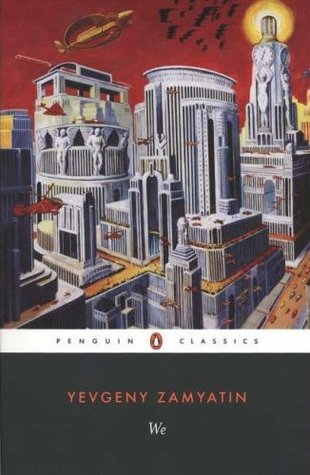
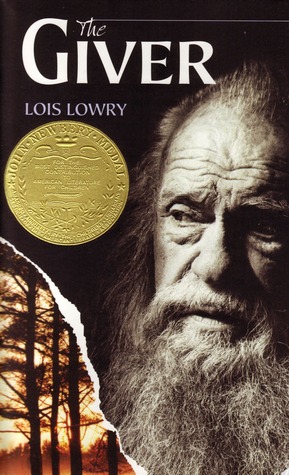
Dystopias have been around since We in 1921. From Brave New World (1932) to Do Androids Dream of Electric Sheep (1968) (This was the inspiration for Blade Runner fyi) to The Handmaid's Tale (1985) to Parable of the Sower (1993) to Battle Royale (2003) and all the dystopian books between them and after the trend has hung around in adult literature. It's been around for the young adult reader for a long time too. I remember when I was in grade 8, we read The Giver, that was back in 2000, 7 years after it was published. It was the first dystopian book I ever picked up, first I'd personally ever heard of; in my experience it's also the first of its type directed to the younger target audience. It's a trend that has grown steadily every decade since it first appeared. The editors over at Wikipedia list 38 dystopian novels between 2000 and 2010 and even though we're only in 2013, there have already been at least 26 published (those are just the 26 the Wiki-editors have caught!) in the 10s, and we're only going to see that number increase (much to my pleasure and the pleasure of other genre fans!).

My 1st & one of my favourites.
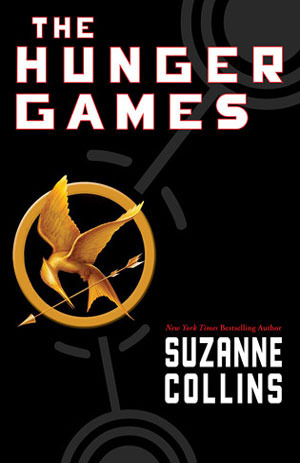
The 00s saw the extreme growth of the genre in the YA field, but in my opinion the explosion in the popularity of the genre can be directly attributed to the popularity of one specific series: Suzanne Collins's The Hunger Games which debuted in 2008 and was followed by Catching Fire in 2009 and Mockingjay in 2010. In the months leading up to the release of Mockingjay I was in midst of a stint working in a grade 7 class so I was right in the middle of all the hype about this book release. Until that point I hadn't even heard of the series, but all of the kids I was working with were DEVOURING it, and some of these kids self professed to hate reading, but they were into these books; that alone made me pick up a copy in their school library and read the summary. The minute I read the cover I was nostalgic for The Giver, that was my introduction to the genre, and the book nerd in me was thrilled that Katniss and company were doing the same for this new generation. 

The trendsetter.
TVTropes cites that one of the key tropes of the dystopian novel is that it ratchets the issues up to eleven well Collins's series took the entire genre and troped the trope. Arguably the only series to take the trope even further was Battle Royale which only began to garner mainstream, widespread recognition after the release of The Hunger Games film because everyone was going comparison crazy. There were a few YA dystopian series in the early 00s, but since Katniss and her bow appeared on the scene the amount of them has increased kind of exponentially; that series really has become the trend setter for that genre.

Another of my favourites & super on trend
I'm personally thrilled by that because I really am a fan of the genre and so far I've really only met one dystopia that I didn't like. James Patterson's Witch & Wizard (2009) trilogy. The concept was fine, but the writing was really bad. The characters were extremely poorly developed, especially the main characters. There were so many gaps and holes and just a general lack of information. The only reason I read the 3rd book is because I hate starting a series and not seeing it through. In my opinion he was simply trying to cash in on the trend. It definitely didn't surprise me to find out that he's one of the writers who only writes outlines and then has people ghost write for him. There are two series that stand out for me as following in Katniss's footsteps as leading the pack in this trend. There's Marie Lu's Legend series, whose first book was one of my favourites of 2012 and whose sequels (and prequel!) are among my most anticipated reads. Then there's Veronica Roth's Divergent series the first two books of which, Divergent and Insurgent, were published in 2011 and 2012 respectively. The movie adaptations for this series are already in the works! The fan base for this series is INSANE. This is one of my personal favourite series' I love it, the characters are amazing, especially Four, I adore Four. The society she has created is, in my experience unique among dystopias. 

Games of a different variety.
There are so many other stand alone books and dystopian series out there now though:

The fact that this is only a selection of the offerings currently available, and doesn't even discuss the stuff in the publishing pipeline excites me beyond measure! I am excited to read all of these and to see what is still to come! It's a good time to be a dystopian fan! And now I will go back to patiently waiting for the Catching Fire movie and the next Veronica Roth novel!

-- Ren

Monday, January 28, 2013

The Goddess Test by Aimée Carter


     Title: The Goddess Test (Goddess Test #1)
     Author: Aimée Carter
     Publisher: Harlequin Teen
     Published: April 19, 2011
     Number of Pages: 293 
     Genre(s): Mythological Fantasy, Paranormal Romance
     Date Read: January 23, 2012
     Acquired: Wal-Mart

Summary: 
Kate Winters and her mum have been on their own for as long as Kate can remember; she has no memories of her father and her mother never even goes near the topic and Kate is fine with that because her mum is her best friend. Things are about to change though, Kate's mum is dying and soon Kate will be even more alone. Her mother's dying wish is to move back to her home town in the middle of nowhere in  northern Michigan. Kate agrees even though it means senior year in a new school, surrounded by new people who have known each other their whole lives. 

For a girl who grew up in New York she thought she was used to weird. But the people at her school are weirder than she's used to but she can't pinpoint why at first; they seem more like a dysfunctional family than school mates, but maybe that's just a symptom of being in the same class with the same people from kindergarten on up? It doesn't take long before the weirdness comes to a head when her new friend takes her to a mysterious estate and that's when everything gets crazy. Ava ends up dead and the owner of the house, a handsome, brooding, dark young man (who we actually met in the prologue talking about his drowned girlfriend..and the other 11 girls who have died being with him in the last 84 years...) claiming to be Hades, god of the Underworld. He tells Kate that he can give her what she wants most, her mother's life, and all she has to do is pass seven tests. To prove to the doubting Kate that he means business, he brings Ava  back from the dead.

Kate, overcome with optimism dives headlong into the tests, and the mysteries of Eden Manor and the surrounding town of Eden. The deeper she goes the more questions she has and the more her life begins to unravel. Has everything she's ever known been a lie? What is the truth? Who is she? And just what is her destiny? Most important of all though, can she survive long enough to learn the answers?

Review:
I love Greek Mythology; I know I've mentioned that more than once, but I'm reviewing another book in the mythological fiction sub-genre so I feel it needs to be reiterated. The story of Hades and Persephone (no Google Chrome spell checker I do NOT want to change that to "Phonephone"!?!) has always been one of my absolute favourites in the Greek canon. I've long since been fascinated by the intricacies in the relationship between Hades and Persephone, and each of their relationships with Demeter (huh spell checker has no suggestions for that one go figure!). I'm intrigued by complex relationships in fiction (and in life) and I think that's all thanks to this story. It never fails to pull me in. As a big fan of the story, I feel comfortable saying that Aimée's re-visioning definitely does it justice; in fact it's got more of the complicated interwoven relationships that I love from the original story!

Putting the Greek Pantheon and the Classic stories into modern day settings is obviously a huge trend right now, especially in the YA field. It seems to be one of several supernatural trends, including zombies, faeries, and werewolves, vying to take over the top spot of vampire romances. I for one hope that this trend wins because I think the stories are rich and vibrant and by bringing them to today's teens in recognisable settings they become a gateway to the original tales; tales which today's teens might not actually be inclined to read, which to me is sad because I started getting Greek Mythology from about the age of 6, so that's my bias.

Obviously it's not perfect, nothing ever is, and if it was it would be boring and uninteresting  because perfect is no fun. One of the major problems I have with this story, but also the whole series, is the characterisation of James/Hermes. Being a fan of the Classic tales I find the behaviour of James/Hermes perplexing. In the myths, Hermes was a cheeky little bugger, he tricked Hera into suckling him by disguising himself as Ares, he stole Apollo's cattle as a newborn and then invented the lyre to apologise; he was a chronic giver and enjoyed his supporting duties as herald and soul conductor. In Goddess Test he's a mopey, emo, mean guy. He comes off as very unsympathetic to me, but I think Aimée meant for us to feel for him, I just don't. I'm also not a big fan of the characterisation of Calliope/Hera, but I can't get too much into what bothers me about that characterisation without spoiling the plot and I hate doing that, so I'll issue a warning instead. If you're a mythology fan and you actually know a bit of information about Hera, try and pretend you don't okay?

Oh and I'm still not sure I'm entirely sold on teenaged versions of the Greek Gods, I just feel like they should at least be portrayed as in their 30s, but given that this story is for the YA market, that's an understandable and forgiveable style choice. 

What are your thoughts on the current trend of taking the Greek myths out of ancient Greece and plunking them down in the modern day? What about the de-aging of the gods in this series?

--Ren

Saturday, January 26, 2013

Pacific Vortex! by Clive Cussler


     Title: Pacific Vortex! (Dirk Pitt #1)
     Author: Clive Cussler
     Publisher: Bantam Books
     Published: January 1, 1983 
     Number of Pages: 93 
     Genre(s): Action, Suspense, Thriller
     Date Read: July, 2012
     Acquired: Waterloo Public Library

Summary: 
PacificVortex! opens with a reflection on famous ships that have sunk in the Pacific Ocean leading into a narrative of the story of Commander Felix Dupree the commanding officer on the newest submarine in the United States navy, the Starbuck, which is on its maiden voyage to Hawai’i. In the tradition of suspense novels, by the end of this prologue the Starbuck is inexplicably lost at sea in extremely mysterious circumstances. Fade to black, fade back in 6 months later on beautiful stretch of Hawaiian beach and up from the water pops, Dirk Pitt, the intrepid star of Pacific Vortex! He’s a former Army Major now working as the number one operative for NUMA (the National Underwater and Marine Agency, which is also totally a real life organisation founded by Clive Cussler.), who happens to be on vacation on the exact beach where a message capsule from the doomed submarine washes ashore; cue the ominous theme music. The message capsule, of course, contains a cryptic account of the Starbuck’s fate makes him immediately suspicious and allows Dirk to connect with the U.S. Navy’s elite salvage operation running out of Pearl Harbour. This is Dirk Pitt’s element; the Salvage team brings him on board and puts him in charge of the operation to find the Starbuck. Pitt risks his life, almost dying several times while he doggedly unravels the mystery of not only the Starbuck’s disappearance but the mysterious fate of thirty more ships who were all also downed in the strange Pacific vortex which has been likened to the Bermuda Triangle, and what he discovers is a shocking surprise that is almost unbelievable!

Review:

The Associated Press, in their review of the novel, which is quoted on the back cover, called Dirk Pitt the Indiana Jones of oceanography; and Clive Cussler himself states in the Forward that when he set out to write this series he was looking to create a character who wasn’t a spy or a detective or a police man which are the stereotypes of the suspense genre. He has definitely succeeded in doing that . The marine and island settings were unusual for this genre back when it was first published. The norm was (and still largely is) cities, with car chases and political intrigue. Cussler broke that mould with Pacific Vortex! A year later Tom Clancy's most well known suspense hero, Jack Ryan, showed up in a submarine thriller, The Hunt for Red October, the 4th book in Clancy's series. I haven't read the Clancy series yet, but from what I can surmise from the summaries, that was the first time Jack Ryan had taken to the sea.

As with most suspense novels that I've read, this one is told in third person perspective and the focus is on following the lead character as he dives head first into the thrilling action that shows us the dangers and perils associated with oceanography and salvaging. What makes this particular plot interesting to me is that it’s not just solely about the action, there is a mystery to solve; clues to follow and conclusions to reach, which makes you invested in the story and gets you right in there with the main character. For me, someone who has a completely irrational fear of sharks and drowning and mild claustrophobia the settings succeeded in making me feel very uneasy at times which definitely added to the suspense of the story for me.

Overall I feel that Pacific Vortex! is a solid example of a suspense thriller thanks to its pacing, it is action packed while also being thought provoking. I really enjoyed this novel and I would recommend it to others. I don’t know if I’ll continue with the whole series but I’ll probably end up reading at least a few more because Dirk Pitt is a very engaging character and the oceanographic adventures are absolutely intriguing to me. That being said I know that Cussler's later books are not written by him, I've been told that he just writes the outlines and hires other people to write the stories based on those. I've read books by other authors who have done that and I have found them problematic and disappointed so I might just steer clear.

This book was written by Cussler though and Dirk’s humour and curiosity kept me into it the entire time and I think they’ll do the same for you.


--Ren

Thursday, January 24, 2013

Narration Part II - Third Person Narrators

Here is the continuation of my exposition on the relative merits of different narrative points of view. Tonight I will share with you all my thoughts on the third person narrator, starting by going back to my go to for conceptual terminology, The Concise Oxford Dictionary of Literary Terms. The dictionary points out something that anyone who reads a lot already knows: third person narration is the most common type of narration. Although I wonder how accurate that statement is now? Because I have come across a fair amount of recently published books (say the last 5-8 years) that are first person, although that could just speak to the type of books that I have come across because first person does seem to be more prevalent in certain genres than others.

In addition to being popular it is also unique among narrative perspectives, first person and second person (the rarest perspective) are both singular in their incarnations, with third person however you can have:

Third Person Omniscient Narrators: I personally have always had a big soft spot for omniscient third person narrators, that perspective is definitely my favourite. Omniscient narrators are all-knowing, they can see and explain the thoughts and actions of every character and every situation in the text. 

Third Person Limited Narrators:Also known as restricted narrators. This type of third person narrator often ends up facing the same issues first person narrators face when it comes to to knowledge of the characters and situations. There are things they don't know and therefore the reader cannot come to know them.


My top 3 Pros & Cons of omniscient third person narration

Pros
Cons
1. Infinite knowledge of the characters
& situations
1. Depending on the writing style,
can come off as looking down on the
audience
2. Usually more objective than other
narrators
2. Potential for information overload
3. Enables more well rounded development
of all characters
3. No direct connection to the main
character (it's a con when you love the 
main character!)

My top 3 Pros & Cons of limited third person narration

Pros
Cons
1. Intimate knowledge of some/
most of the characters & situations
1. Missing information, limited
insights into characters & plot
2. Usually more objective than other
narrators
2. Potential for inconsistencies if
the writer can't remember what limits
he/she has given the narrator
3. Easier to withhold information
that could give away important elements
3. No direct connection to the main
character (it's a con when you love the 
main character!)


Don't Panic when the Guide
goes off on a narrative tangent
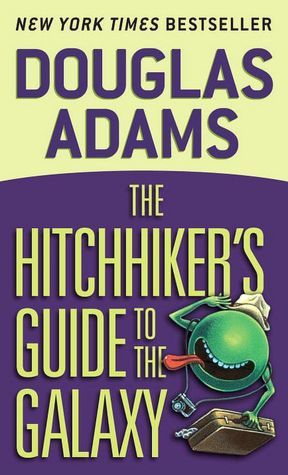
A fair few of my favourite novels are third person narratives. It's not often that I come across a third person narrator that I dislike. Anyone who knows me knows that my favourite novels are J.K. Rowling's Harry Potter novels; I love everything about them, especially the way she does third person narration. Her limited third person narration is brilliant in my humble opinion; the further into the series you get the more secrets are revealed that the narrator has expertly kept from the reader until that point. My all time, ultimate favourite when it comes to narrators though HAS to be the uber-omniscient third person narrator in Douglas Adams' The Hitchhiker's Guide to the Galaxy series. I know I said up there that information overload could be a con, but I get far too much enjoyment out of it the way Adams does it, the narrator is just so irreverent and funny. Since reading this series I have found that Adams' narrative style here has heavily influenced my own.

Some other third person narrators that I particularly enjoyed? Guy Gavriel Kay's The Fionavar Tapestry, Frank Beddor's The Looking Glass Wars, Donita K. Paul's DragonKeeper Chronicles and last but certainly not least because they are another of my all time favourites Patricia C. Wrede's Enchanted Forest Chronicles.

The epitome of omniscient third
person narration...but a little too
much information overload 
Now obviously I don't like every third person narrator that I read; a person cannot like EVERY book they read it just doesn't happen that way. Some of the narrators that I am not a huge fan of will probably have people shouting things like "BLASPHEMER!" or "YOU CLAIM TO BE A FANTASY FAN!??!" at their screens but like I said a person cannot enjoy every book they read and I have my reasons for disliking these. Firstly Gregory Maguire's Wicked I love the concept, and the story, but the actual narration just did me in. I found it slow and plodding in spots and actually ended up having to force myself to finish it; it took me a month and a half which is almost unheard of with the way that I read. Another that I didn't enjoy? R. Scott Bakker's The Prince of Nothing trilogy. I REALLY wanted to love this series, especially because the author is Canadian, but it was just too heavy and slow for my tastes and a far different kind of information overload than Douglas Adams. And speaking of problems with information overload, here's where I'm going to get the most grief: I do not enjoy J.R.R. Tolkien's writing style; I LOVE the stories and the characters and the world and I am in absolute AWE of the painstaking level of detail he put into things, but there's just too much information overload in the story for me. I've had the books read to me and that I enjoyed, but trying to read them myself I just couldn't wade through everything. I have the same problem with Charles Dickens and any other writer who was paid by the word.

In the end I think I probably enjoy third person just slightly more than I enjoy first person. Really I'm happy either way so long as I have a reliable narrator who isn't trying to fry my synapses with unnecessary information and who doesn't give away all the important details too early. What about you what are you narrative preferences?

-- Ren

Monday, January 21, 2013

First Read Friday - Death Has Come Up Into Our Windows


     Title: Death Has Come Up Into Our Windows
     (The Zombie Bible Book #1)
     Author: Stant Litore 
     Publisher: 47North 
     Published: August 14, 2012 
     Number of Pages: 93 
     Genre(s): Horror, Historical Fiction, Mythology
     Date Read: January 13, 2013
     Acquired: Chapters

Summary: 
Yerusalem is being ravaged by a plague, so what else is new? It's biblical times, something bad is always happening in Yerusalem! This isn't just your normal plague though, this isn't wine and water turning to blood, it's not frogs or fireballs falling from the sky, and it's definitely not something as mundane as a plague of locusts. No, this is an old plague, true evil, a sign that the people of Yerusalem have truly failed God and are doomed, it must be; for why else would the dead be walking the earth?

Yirmiyahu (Jeremiah for those of you unfamiliar with the biblical spelling) tried to warn the people, he truly did. He tried to stop them, did everything in his power to try and make them see the error of their ways. He has failed; the city is besieged by Babylon and there are more and more dead wandering the streets, soon they will surely out number the living. He is of course terrified and appalled, with his fellow men and especially with himself. He blames himself for their downfall, for not doing even more than he did to stop it from coming to this. Yirmiyahu has given everything to try and save Yerusalem, even breaking his covenant with his wife to send her away so that he could stay and try to save the city he loves. But now he is alone, for even God has left Yirmiyahu.

WIthout God how can Yirmiyahu hope to save Yerusalem and its people from the tide of walking dead that they unleashed upon themselves?

Review:
At 93 pages this is a lovely little one sitting read, or at least it would have been something I could have read in one sitting were it not for the fact that I've been having a hard time concentrating on anything for more than thirty minutes at a time thanks to my wisdom tooth headaches (I'm headed to the dentist on Wednesday to get that looked at). I like books that can be read in one sitting, I'd much rather spend two and a half hours reading a book from start to finish than watching a movie. The book is a much richer world and I have a very vivid imagination; I usually much prefer my own visualisations to those in film adaptations for example. Because of my headaches, I wanted something that would allow me to get through it quickly because I knew it would be an effort to focus so I scoured the pile and came away with this and it fit my reading needs at the time perfectly.

This is not the type of book I would normally gravitate towards, when it comes to supernatural creatures I'm usually a vampire or werewolf fan. I always used find zombies to be incredibly lame but then I took a class back in 2008 and we studied zombie movies and even though I still thought they were lame I enjoyed the symbolism of them. Milla Jovovich and the Resident Evil series can be attributed with eradicating my dislike of zombies; the zombies in that series are not lame at all. So thanks to that class, and Resident Evil when I won the third book in the Zombie Bible series from Book Riot's Name that Author contest one week back in November I was super excited to read it because a) Hey I won a free book! Yeah! and b) Oooh Christian mythology meets modern horror! so I decided then and there that I would acquire the first two books and read them in order. I asked my local library to order them, and they did; but then I ended up getting a lot of book money for Christmas and just bought them myself. 

I'm extremely glad that I did decide to dive in and give the zombie lit. a chance because this book didn't disappoint me. That being said, if you're a zombie fan a word of warning, do not be fooled by the gory cover image above, the title or the summary; the zombies are in there, assuredly, but they are not the stars of the action so if you're expecting gory action scenes all over the place and life or death chases this is not the zombie book you are looking for. I for one am okay with that because I really enjoyed the direction that the author took the story but maybe that's just the religious culture scholar in me? There's a lot of philosophical and religious waxing on the part of the main character; a good 90% of the book is him working through his own actions and those of his fellow Israelites, trying to figure out if they are capable or even worthy of redemption by God. For that reason the narrative is not linear it jumps around a lot between the present and several different points in the past through flashbacks.

On the plus side you really don't need to know anything at all about Christian mythology because Litore has taken little almost meaningless biblical incidents and imbued them with a new fantastical life. It is a bold undertaking indeed, and I know that there are people out there who are perfectly willing and ready to label this as sacrilege or blasphemy, but I am not one of those people. I applaud him for having the courage to take on this idea and it is a brilliant one. He has executed his vision amazingly, and he is so completely into this project that even his historian's note at the beginning and about the author section at the back do not break from the character he has created for himself of a zombie historian who has survived a 1992 outbreak of zombies in the Pacific Northwest. That right there is dedication to one's art.

I am excited to read the rest of the series and Stant Litore is now most definitely on my list of authors to watch for.

Check him and his zombies out at http://zombiebible.blogspot.com

--Ren

Friday, January 18, 2013

Dragon Actually by G.A. Aiken

It was my birthday this past Wednesday so a relative has come to visit for the weekend. So I am pre-empting tonight's First Read Friday (pushing it to Monday) and sharing a book review I wrote this past summer for my Genre Fiction & Readers' Advisory class.


obligatory romance novel pecs!

     Title: Dragon Actually (Dragon Kin book #1)
     Author: G.A Aiken
     Publisher: Zebra Books (Kensington Publishing Corp.)
     Published: September 1, 2008 
     Number of Pages: 342
     Genre(s): Fantasy, Romance
     Date Read: June 2012
     Acquired: Amazon.ca

Summary: 
Dragon Actually actually contains two distinct stories, the novel length titular tale, Dragon Actually and a novella length companion tale titled Chains & Flames that have been combined into a single volume, the first in what is currently a series of six (with more on the way) called TheDragon Kin series.

Dragon Actually is the story of the relationship between an antisocial dragon called Fearghus the Destroyer, in a case of "Our Dragons are Different", he has a human self and his human self saves known a human female as Annwyl the Bloody (contextually iffy nickname wouldn't you say?), a Warrior-Princess on the run from the half-brother, the King of the land, who wants her dead. Fearghus takes on the role of protector (in his dragon form) and teacher (in his human form) to help prepare Annwyl for the fight against her brother King Lorcan so she will be capable of taking his head and his throne; that was supposed to be their arrangement, but neither one was counting on falling in love. 

Throughout Dragon Actually we're introduced to a small number of the multitude of members of Fearghus’s family, who will populate the rest of the series of course, including both of his parents, Queen Rhiannon and Bercelak the Great, her Consort and just a few of his siblings. Chains & Flames is the story of how Rhiannon and Bercelak came to be the strong, untied, mated pair with the large brood introduced in Dragon Actually. It chronicles the lowest point of then Princess Rhiannon’s lifelong battle with her mother Queen Addiena and how together with Bercelak and the love and support of his family, experiences she had previously never had, she was able to triumph over her mother to become Queen (the fact that she finally has someone to dominate her helps; she doesn't want to be in charge in every respect after all).


Review:
You know right off that since this is a romance novel (albeit a paranormal fantasy romance novel), the main focus of these stories is going to be on the main characters falling in love with one another and getting it on, and Aiken makes good on that expectation. The reader gets very invested in the outcomes of these romances because Aiken’s characters are fantastically developed. They are people (or dragons in people form if you want to get nuanced) that you want to know. They are very real and every single one of them is flawed and vulnerable; there are no perfect characters here. Aiken’s characters all for one reason or another have either chosen to or been unable to find, as Rhiannon says in Chains & Flames their ‘one true mate’ up until the time of the action in the stories. Sometimes to me the relationships in romances can feel very contrived and forced because the whole purpose is that the main characters are perfect for each other and will therefore end up together. Aiken’s relationships don’t feel forced, the circumstances don't feel contrived for one very important reason, the context of the world she has created.

The world in which Dragon Actually and Chains & Flames  takes place to me seems very reminiscent of medieval Europe, if you continue reading the series you'll encounter a region and people none to dissimilar from the vikings. There are multiple different regions and political systems in play and in conjunction with her romance plots Aiken focuses a great deal on the various political intrigues and interplays. The inciting action in both tales involves a fight between family members over the throne of a particular kingdom; the whole thing would not be out of place in an HBO series. It is this setting, when the characters are placed in it in their specific roles; the scenarios do not appear contrived and forced. Overall these books are honest about what they are; they don’t try and pretend to be something else to draw you in. It is very clear from the cover that you are getting a romance novel, but once you read the jacket descriptions and get into the books, you realise you’re getting not just romance but also complex fantasy for a very multi-layered story.

If you can’t tell yet, I absolutely adored the book, to the point that I went out and bought all six and I’m going to read every single one (still working on it, I've read the first 3, the rest are in the pile). My favourite part of the story shouldn't surprise you; it is the interaction between the characters, they are sarcastic and there is so much biting humour that it’s impossible not to laugh; it's like a full cast of dead pan snarkers. In the past when I’ve tried reading romance novels I was always turned off by the cheese factor of them, but that didn’t happen here, the fantasy setting and storylines caught my interest and held me, but the characters and their dysfunctionality and humour are what made me fall in love with the story.

Do you usually go for romance novels? If not have you ever been drawn into one? What drew you in?


--Ren